
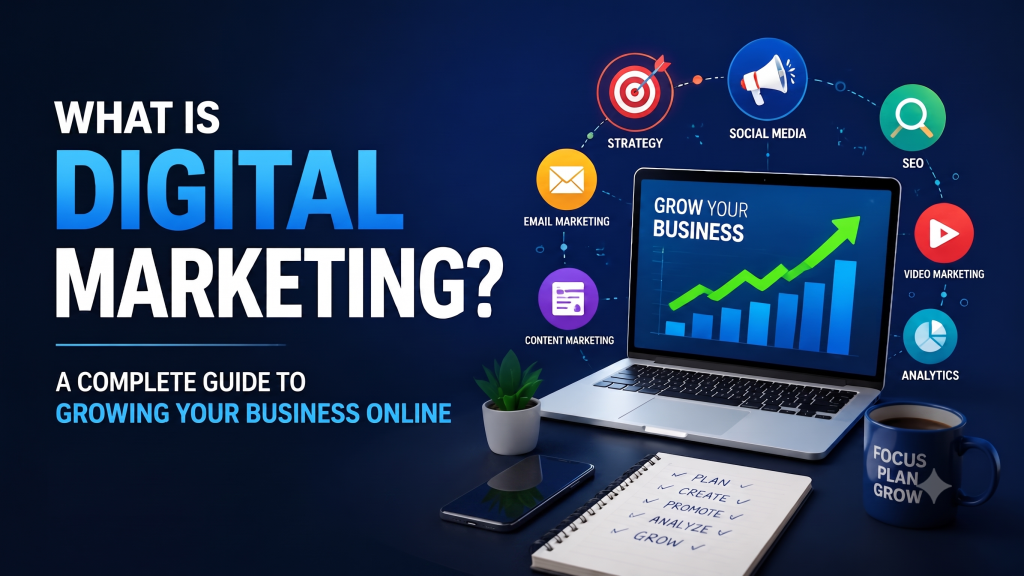
Today, the way people search for products and services has completely changed. Before making a purchase decision, customers usually search on Google, compare different options, read reviews, and visit websites to understand a business better. This change has made businesses realize the importance of digital strategies and understand what digital marketing is and how it helps them connect with customers online. This online research process has become a normal part of the customer journey. Businesses that have a strong online presence can reach customers at the right time, while those with limited visibility may lose opportunities to competitors.
This is where digital marketing helps businesses grow. It allows brands to promote their products and services through online channels such as search engines, websites, social media platforms, email campaigns, and online advertising.
Unlike traditional marketing, digital marketing helps businesses connect with people who are already interested in their products or services. With the right digital marketing strategy, businesses can improve brand awareness, generate quality leads, and build long-term customer relationships.
Whether you are running a small business, an e-Commerce store, or an established company, investing in effective digital marketing services can help you achieve better online growth.
In this guide, you will learn what digital marketing is, how it works, its major types, benefits, and why businesses choose a professional digital marketing agency.
What Is Digital Marketing?
Digital marketing is the process of promoting products, services, or brands using digital platforms and internet-based technologies. It includes different channels such as search engines, websites, social media, email marketing, mobile apps, and paid advertising.
The main goal of digital marketing is to reach the right audience, increase online visibility, attract potential customers, and encourage them to take action.
Unlike traditional advertising methods, digital marketing allows businesses to measure their performance. Companies can track website traffic, customer behaviour, campaign results, and conversions to improve their strategies.
For example, if a person searches Google for “best digital marketing agency near me” and finds your website, they can explore your services, check reviews, and contact your business. This complete process shows how digital marketing connects businesses with potential customers.
Today, businesses of all sizes use digital marketing to build trust, increase visibility, and compete in the online marketplace.
Why Is Digital Marketing Important?
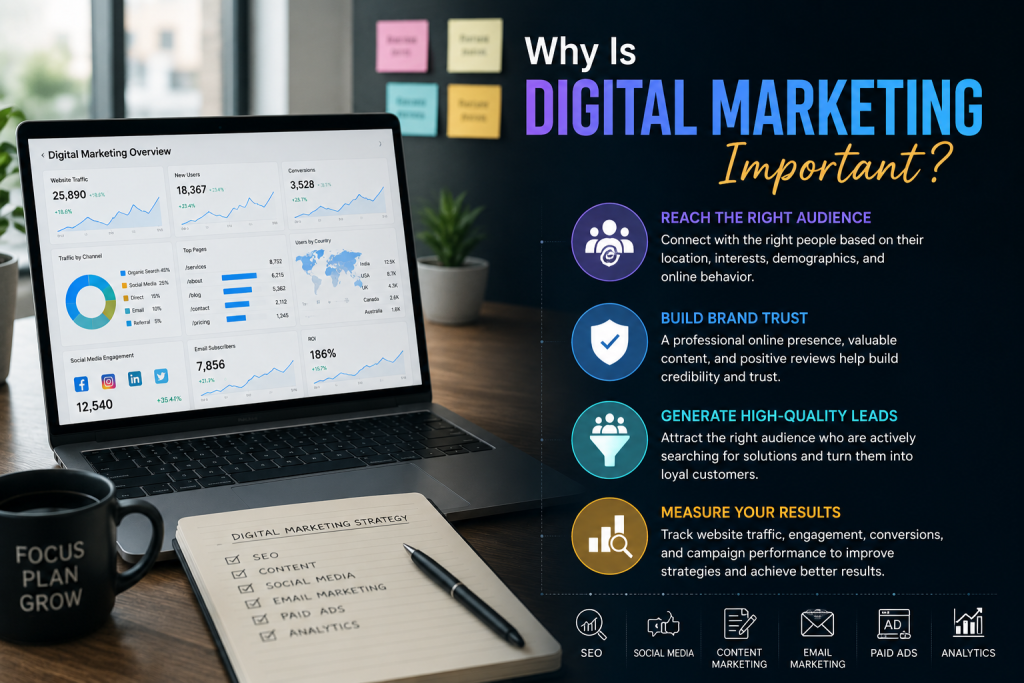
Customer behaviour has changed because of the increasing use of the internet. People now research online before purchasing any product or service.
They compare brands, read customer reviews, check websites, and look for valuable information before making a final decision.
Because of this change, businesses need a strong digital presence to attract and engage customers effectively.
- Reach the Right Audience
One of the biggest advantages of digital marketing is targeted audience reach.
Businesses can connect with customers based on their location, interests, demographics, and online behaviour. This helps companies focus their marketing efforts on people who are more likely to be interested in their products or services.
- Build Brand Trust
A professional website, useful content, positive reviews, and active social media presence help businesses build credibility.
When brands consistently share valuable information and communicate with customers online, they create trust and stronger relationships.
- Generate High-Quality Leads
A successful digital marketing strategy focuses on attracting visitors who are actively searching for solutions.
By reaching the right audience, businesses can generate better-quality leads and improve the chances of converting visitors into paying customers.
- Measure Your Results
Digital marketing allows businesses to analyze campaign performance through accurate data and valuable insights, helping them make smarter marketing decisions.
Businesses can track website visitors, customer engagement, conversions, and advertising results. This data helps companies improve their strategies and make better decisions.
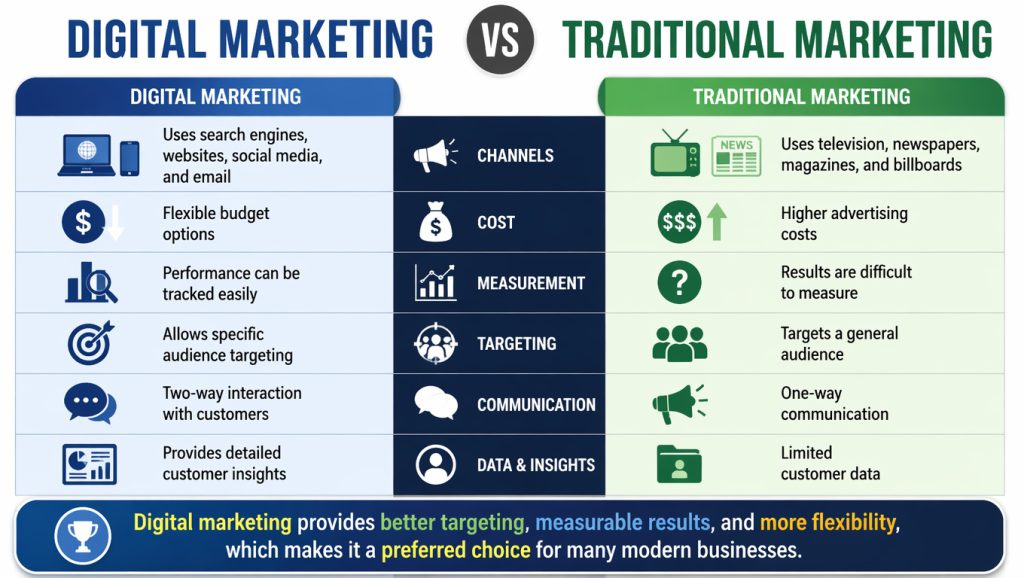
Digital Marketing vs Traditional Marketing
How Does Digital Marketing Work?
Digital marketing works by guiding customers through different stages of their buying journey.
Step 1: Customer Discovery
A potential customer searches for information on Google, social media, or other online platforms and discovers a business through search results, advertisements, or content.
Step 2: Website Research
After finding a brand, customers visit the website, explore products or services, read blogs, and check customer reviews.
Step 3: Building Trust
Helpful content, professional website design, and customer feedback help businesses build visitor confidence.
Step 4: Taking Action
Once customers trust a brand, they may contact the business, request a quote, subscribe to updates, or purchase a product.
Step 5: Maintaining Relationships
Businesses continue engaging customers through email marketing, valuable content, offers, and customer support.
This process helps businesses attract new customers, increase conversions, and create long-term relationships.
Main Types of Digital Marketing
A successful business usually depends on multiple digital marketing channels rather than a single method. Different strategies work together to improve visibility, attract customers, and increase conversions.
1. Search Engine Optimization (SEO)
Search Engine Optimization (SEO) is the process of improving a website to increase its visibility on search engines like Google.
A strong SEO strategy helps businesses get organic traffic without paying for every visitor. It includes keyword optimization, quality content creation, website improvements, and technical SEO practices.
SEO is a long-term marketing strategy that helps businesses reach people who are already searching for related products or services.
Learn more about SEO Strategies
2. Content Marketing
Content Marketing focuses on creating useful and valuable content to attract and educate customers.
Businesses use blogs, videos, guides, case studies, and social media content to answer customer questions and provide solutions.
High-quality content helps build trust, improve website authority, and support SEO efforts by bringing more visitors to the website.
3. Social Media Marketing
Social media marketing helps businesses promote their brands and connect with customers through platforms like Facebook, Instagram, LinkedIn, and X.
Businesses use social media to share updates, engage with audiences, promote products, and increase brand awareness.
Regular interaction and valuable content help companies build stronger relationships with their customers.
4. Email Marketing
Email marketing is one of the most effective ways to communicate directly with customers.
Businesses use emails to share newsletters, special offers, product updates, educational content, and personalized recommendations.
A well-planned email marketing strategy helps improve customer engagement, increase loyalty, and encourage repeat purchases.
5. Pay-Per-Click (PPC) Advertising
PPC advertising allows businesses to display paid advertisements on search engines and social media platforms.
Unlike SEO, which takes time to generate results, PPC can provide faster visibility and targeted traffic.
Businesses only pay when someone clicks on their advertisement, making it a measurable and flexible marketing method.
6. Influencer Marketing
Influencer marketing involves collaborating with content creators who have an engaged audience.
Influencers help businesses promote products or services through authentic recommendations and reach specific customer groups.
Choosing the right influencer with a relevant audience is important for achieving successful results.
7. Affiliate Marketing
Affiliate marketing is a performance-based strategy where individuals promote products or services and earn a commission for successful sales or actions.
It helps businesses reach new customers through trusted recommendations while creating additional sales opportunities.
Benefits of Digital Marketing for Businesses
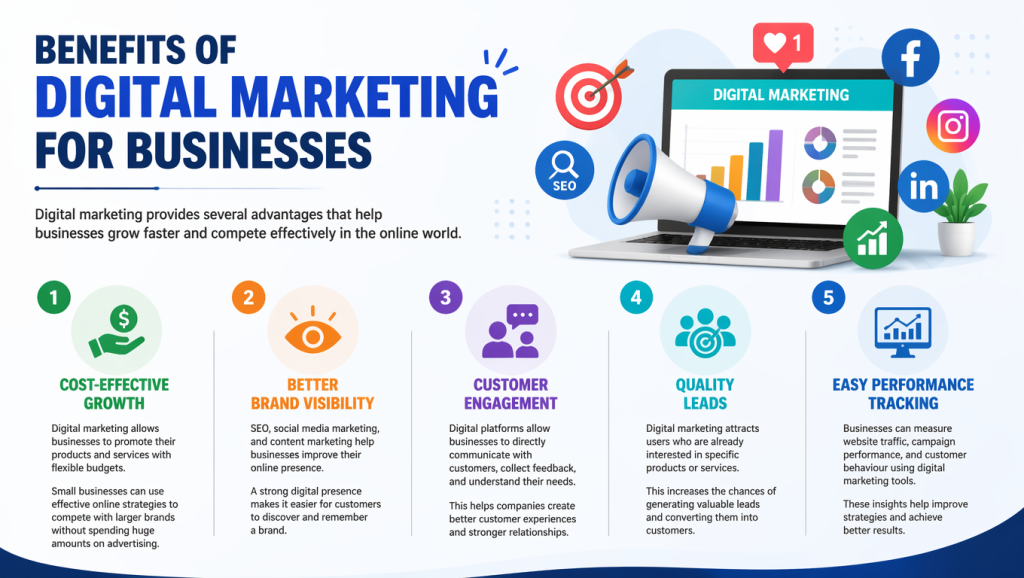
Digital marketing provides several advantages that help businesses grow faster and compete effectively in the online world.
1. Cost-Effective Growth
Digital marketing allows businesses to promote their products and services with flexible budgets.
Small businesses can use effective online strategies to compete with larger brands without spending huge amounts on advertising.
2. Better Brand Visibility
SEO, social media marketing, and content marketing help businesses improve their online presence.
A strong digital presence makes it easier for customers to discover and remember a brand.
3. Customer Engagement
Digital platforms allow businesses to directly communicate with customers, collect feedback, and understand their needs.
This helps companies create better customer experiences and stronger relationships.
4. Quality Leads
Digital marketing attracts users who are already interested in specific products or services.
This increases the chances of generating valuable leads and converting them into customers.
5. Easy Performance Tracking
Businesses can measure website traffic, campaign performance, and customer behavior using marketing tools.
These insights help improve strategies and achieve better results.
Why Businesses Hire a Digital Marketing Agency?
Managing online marketing requires knowledge, experience, and continuous improvement. This is why many businesses choose professional marketing agencies.
A marketing agency helps businesses improve their online presence through services such as:
- Search Engine Optimization (SEO)
- Social Media Marketing
- Content Marketing
- Google Ads
- Website Optimization
- Analytics Tracking
Professional experts help businesses create effective strategies, save time, avoid common mistakes, and achieve better online growth.
A reliable marketing agency understands customer behaviour, market trends, and the latest tools needed to improve business performance.
Future of Digital Marketing in 2026
Digital marketing continues to evolve with new technologies and changing customer expectations. Businesses need to adapt to these changes to stay competitive.
AI Marketing
Artificial Intelligence (AI) is transforming marketing by helping businesses with content creation, automation, customer analysis, and personalized recommendations.
AI tools help marketers make faster decisions and improve customer experiences.
Personalization
Customers now expect brands to provide experiences based on their interests and preferences.
Personalized content, recommendations, and communication help businesses increase engagement and build stronger connections.
Video Marketing
Video content continues to grow because people prefer quick and engaging information.
Short videos, tutorials, product demonstrations, and educational content help brands attract and connect with audiences.
Voice Search
With the growth of smart devices, voice search is becoming more popular.
Businesses are optimizing their websites and content to improve visibility in voice-based searches.
Conclusion
Digital marketing has become an essential part of modern business growth. It helps companies reach the right audience, increase brand visibility, generate leads, and build long-term customer relationships.
With changing technology and increasing online competition, businesses that invest in effective marketing strategies can create stronger opportunities for future growth.
Whether it is SEO, content marketing, social media, email campaigns, or paid advertising, the right combination of digital marketing services can help businesses achieve sustainable success in 2026 and beyond.
FAQ Section
Digital marketing is the process of promoting products and services through online channels like search engines, websites, social media, email, and online advertising.
Digital marketing helps businesses reach targeted customers, increase online visibility, generate leads, and build long-term relationships.
The main types include SEO, content marketing, social media marketing, email marketing, PPC advertising, influencer marketing, and affiliate marketing.
Small businesses can use SEO, social media, content marketing, and paid advertising to attract customers and compete online.