
Introduction: The New Era of Search Has Arrived
The way people discover and consume information online is evolving rapidly in the age of artificial intelligence. A few years ago, users mostly searched with short keywords and selected websites from a list of blue links. Today, people ask detailed questions and expect accurate, personalized answers within seconds. This change in search behavior has made AI SEO an important approach for businesses that want to stay visible in modern search experiences.
This major shift is happening because of artificial intelligence.
Search engines are no longer focused only on matching keywords. Modern search systems are becoming smarter by understanding context, user intent, relationships between topics, and the overall quality of information.
For businesses, this means traditional SEO alone is not enough.
Keywords, backlinks, technical SEO, and website optimization are still important. However, brands now need to understand how AI-powered search platforms discover, analyze, and recommend content.
This is where AI SEO becomes essential.
AI SEO is the practice of optimizing website content, structure, and online presence so that artificial intelligence systems can better understand, trust, and recommend your information.
In 2026, businesses that adopt AI SEO strategies early can improve their chances of appearing in Google AI Overviews, AI-powered search results, and platforms like ChatGPT and Gemini.
The future of search is not only about ranking higher. It is about becoming a trusted source that both users and AI systems recognize.
What Is AI SEO?
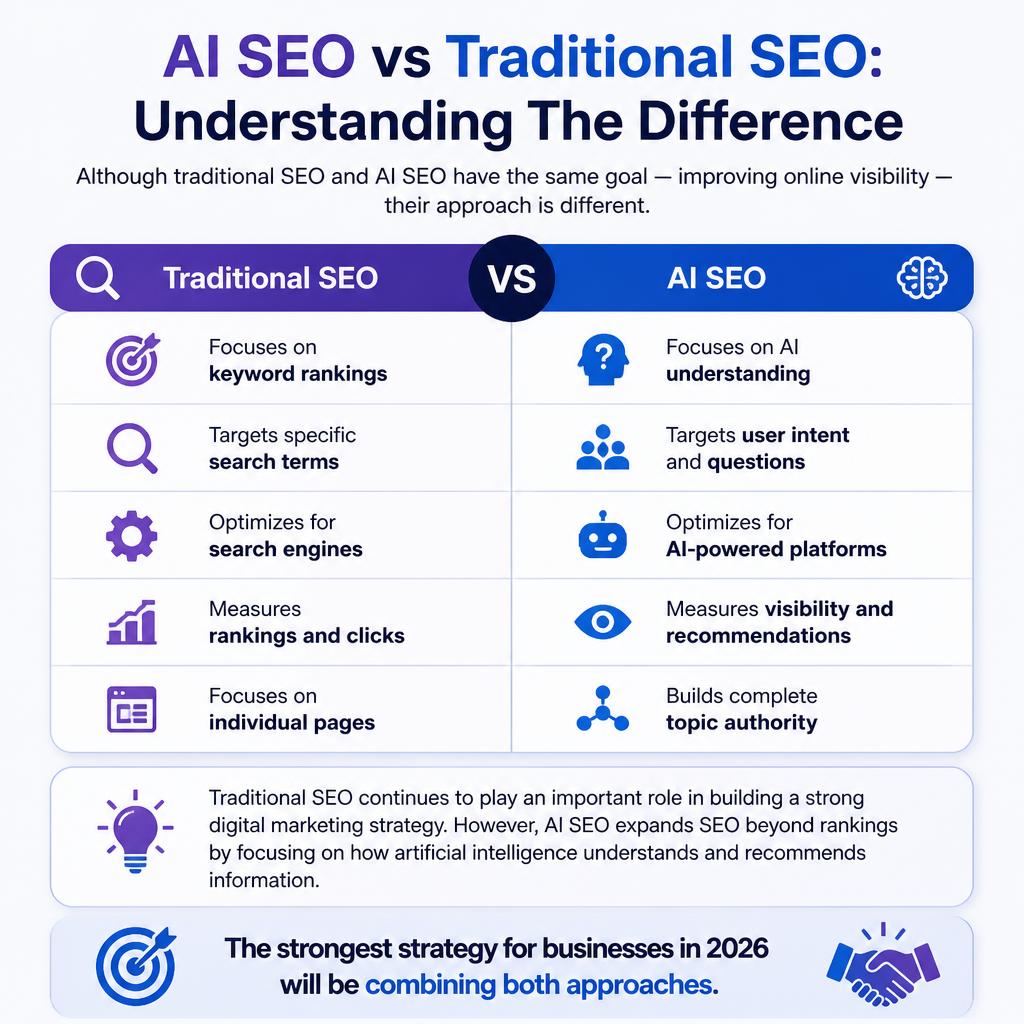
AI SEO combines traditional search engine optimization with strategies designed for artificial intelligence-driven search experiences.
Traditional SEO focuses on improving website rankings through methods such as:
- Keyword optimization
- Technical SEO improvements
- Backlink building
- Content creation
- Website speed optimization
However, AI-powered search works differently.
Instead of simply looking for exact keywords, AI systems analyze the meaning behind searches and evaluate whether content provides the best possible answer.
For example, consider a user searching: Which digital marketing strategies can help small businesses grow online in 2026?
A traditional SEO approach would focus on creating content around this keyword.
An AI SEO approach focuses on understanding what the user actually wants:
- Which strategies work for small businesses?
- What budget is required?
- Which platforms should businesses use?
- What mistakes should they avoid?
- What results can they expect?
AI systems prefer content that provides complete answers instead of content created only for search engines.
Therefore, the goal of AI SEO is to create helpful, trustworthy, and well-structured content that artificial intelligence can easily understand.
Why AI SEO Is Important in 2026
The digital landscape has changed significantly.
Earlier, businesses competed mainly for Google rankings. Today, they also need visibility across AI-powered platforms where users discover information differently.
Here are the main reasons why AI SEO in 2026 is becoming important.
1. Search Behavior Is Becoming More Conversational
Users are changing the way they search.
Instead of typing:
“SEO agency”
People now ask:
“Which SEO agency can help a small business increase online visibility?”
or:
“How can a startup improve Google rankings without spending a huge budget?”
AI-powered search engines are designed to understand these detailed questions and provide relevant answers.
This means businesses need to create content that matches real conversations instead of focusing only on short keywords.
A successful AI search optimization strategy starts with understanding customer questions and creating valuable solutions.
2. Google Is Moving Towards AI-Powered Search
The search experience is evolving as Google introduces AI-powered features that are changing how users discover and interact with information.
Google AI Overviews can summarize information from multiple sources and provide users with quick answers directly on the search page.
This creates a new challenge and opportunity for businesses.
Ranking is no longer only about appearing at the top of traditional results.
Businesses also need content that can be:
- Understood by AI systems
- Considered trustworthy
- Selected as a reliable source
- Included in AI-generated responses
To achieve this, websites need strong content quality, clear structure, and authority in their industry.
3. Traditional Rankings Are Not The Only Success Metric
For many years, SEO success was measured through:
- Keyword rankings
- Organic traffic
- Click-through rates
- Website positions
These metrics are still valuable, but AI search introduces new goals.
Modern businesses should also focus on:
- Brand visibility
- AI mentions
- Topic authority
- Content credibility
- User trust
A website that becomes a trusted information source has a stronger chance of being recognized by AI platforms.
This is why businesses need to look beyond traditional ranking methods and prepare for the future of search.
How AI Understands Website Content and AI SEO Strategies for 2026
Modern AI-powered search systems do not understand websites in the same way traditional search engines did.
Earlier, search engines mainly focused on keywords and links. Today, artificial intelligence analyzes the complete meaning of content, the relationship between topics, and the value a website provides to users.
AI systems evaluate different factors such as:
- Content relevance
- Topic depth
- Website authority
- User experience
- Information accuracy
- Content structure
For example, if a website publishes only one article about digital marketing, AI systems may have limited understanding of its expertise.
However, a website that consistently creates content about:
- SEO
- Google Ads
- Social media marketing
- Content strategy
- Website optimization
- Analytics
can help AI systems understand that the website has knowledge and expertise in the digital marketing field.
For a brand like Khushvora, creating a connected content ecosystem around digital marketing topics can improve online authority and help search engines better understand the brand’s expertise.
The Role of Topical Authority in AI SEO
Topical authority has become an important part of modern SEO.
It means creating detailed and valuable content around a specific subject instead of publishing random articles.
For example, a digital marketing website can build authority by creating content clusters:
SEO Topic Cluster:
- What Is SEO?
- Technical SEO Guide
- On-Page SEO Strategies
- Link Building Techniques
- SEO Trends in 2026
Digital Marketing Topic Cluster:
- Digital Marketing Basics
- Social Media Marketing Strategies
- Google Ads Guide
- Content Marketing Tips
When related content is connected properly, AI systems can understand the website’s expertise more effectively.
A strong AI SEO strategy focuses on becoming a reliable source of information rather than creating content only for rankings.
What Is GEO (Generative Engine Optimization)?
One of the biggest developments in AI search is Generative Engine Optimization (GEO).
GEO focuses on optimizing content so that AI-powered search engines and answer engines can discover, understand, and use your information.
Traditional SEO helps websites rank in search results.
GEO helps businesses increase visibility in AI-generated answers.
Examples of AI platforms where GEO is becoming important include:
- ChatGPT
- Google AI Overviews
- Gemini
- Other AI search assistants
To improve GEO performance, businesses should focus on:
1. Providing Clear Answers
AI systems prefer content that directly answers user questions.
Instead of writing broad content, create sections that answer specific queries.
For example:
Question:
“How does SEO help small businesses?”
Better answer:
SEO helps small businesses increase online visibility, attract targeted visitors, and generate long-term organic traffic without depending only on paid advertising.
Clear answers are easier for AI systems to understand and summarize.
2. Creating Original and Trustworthy Content
AI platforms are designed to provide useful information.
Content that only repeats existing information may have less value.
Businesses should include:
- Unique insights
- Real examples
- Industry experience
- Expert opinions
- Practical recommendations
Original content helps build credibility with both users and AI systems.
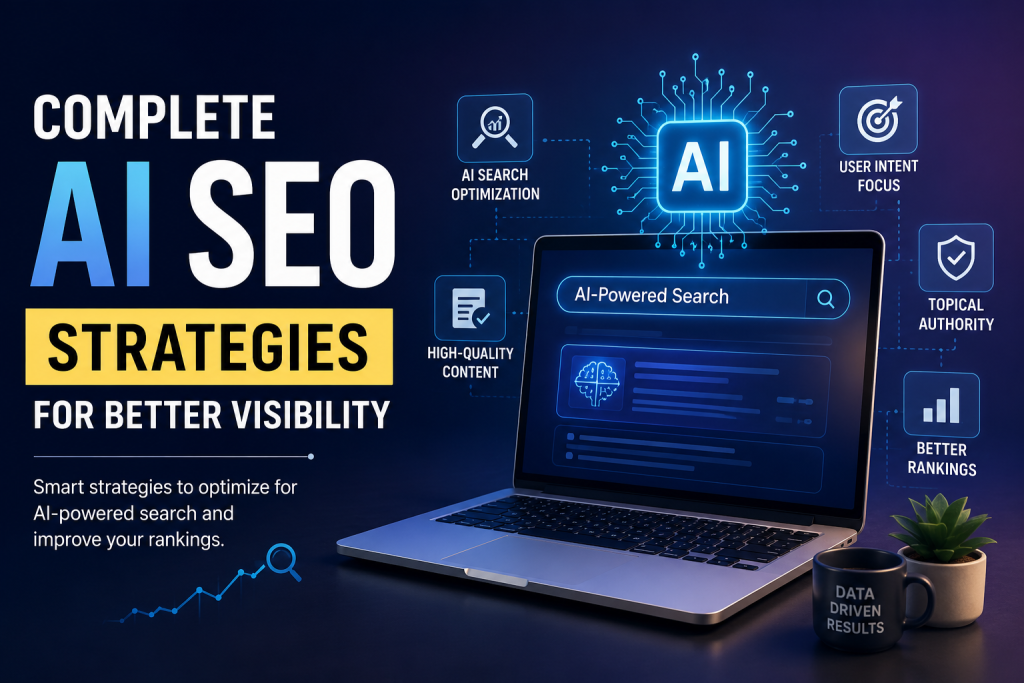
Complete AI SEO Strategies for Better Visibility
1. AI-Powered Keyword Research
Modern SEO is not only about keywords.
Businesses need to understand why users are searching.
Search intent generally includes:
Informational Intent
Users want to learn something.
Example:
“What is AI SEO?”
Commercial Intent
Users are comparing options.
Example:
“Best SEO agency for small businesses”
Transactional Intent
Users are ready to take action.
Example:
“Hire digital marketing agency”
Creating content based on search intent improves the chances of reaching the right audience.
2. Smart Content Optimization
People interact with AI search tools differently.
They ask complete questions instead of typing short keywords.
Therefore, websites should include conversational content.
For example:
Instead of targeting only:
“SEO services”
Create content that answers:
“How can SEO services help a business get more customers?”
Natural language improves the chances of appearing in AI-generated responses.
3. Improve Website Experience
AI SEO is not only about content.
Website performance and user experience still matter.
Important factors include:
- Fast loading speed
- Mobile-friendly design
- Easy navigation
- Secure website connection
- Clear page structure
A website that provides a better experience can build stronger trust signals.
4. Create FAQ-Based Content
Frequently Asked Questions help both users and AI systems.
FAQ sections provide direct answers to common questions.
Examples:
What is AI SEO?
AI SEO is the process of optimizing digital content so artificial intelligence systems can understand and recommend it.
Will AI replace traditional SEO?
No. AI SEO works together with traditional SEO by improving how content is understood by modern search systems.
Adding useful FAQs can improve content visibility and user engagement.
5. Strengthen E-E-A-T Signals
Google and AI systems value trustworthy information.
E-E-A-T means:
- Experience
- Expertise
- Authoritativeness
- Trustworthiness
Businesses can improve these signals by:
- Adding detailed author information
- Sharing practical examples
- Updating old content
- Providing accurate sources
- Showing real industry knowledge
Strong E-E-A-T helps websites build credibility.
AI SEO Mistakes Businesses Should Avoid
While adapting to AI search, businesses should avoid common mistakes.
1. Creating Content Only for Keywords
Keyword optimization is important, but excessive keyword usage can make content unnatural. Focus on helping users first.
2. Publishing Low-Quality AI-Generated Content
AI tools can help create content faster, but human editing and expertise are necessary.
Content should include:
- Original thoughts
- Brand perspective
- Real examples
3. Ignoring Technical SEO
AI SEO does not replace technical SEO.
Businesses still need:
- Proper indexing
- Clean website structure
- Schema markup
- Optimized pages
Technical foundations remain important.
Future of SEO: AI and Human Expertise Together
The future of SEO will not be controlled by artificial intelligence alone.
The strongest results will come from combining:
- AI technology
- Human creativity
- Expert knowledge
- Strong branding
- Valuable content
AI can help businesses understand data, analyze trends, and improve efficiency.
However, human experience creates the unique insights that make content valuable.
Businesses that successfully combine traditional SEO with AI SEO strategies will have a stronger advantage in the future digital landscape.
Preparing for the Future of Search
AI SEO in 2026 represents a major evolution in digital marketing.
Search engines are becoming more intelligent, and businesses need to adapt their strategies accordingly.
The future is not only about ranking for keywords. It is about creating valuable content that users trust and AI systems understand.
Businesses that focus on:
- Helpful information
- Strong topical authority
- Technical SEO
- Original insights
- AI search optimization
Can build a stronger online presence.
For brands like Khushvora, combining creativity, SEO expertise, and AI-focused strategies can create long-term digital growth and better visibility in the changing search environment.
FAQ Questions
1. What is AI SEO?AI SEO is the process of optimizing websites and content so AI-powered search systems can better understand, evaluate, and recommend information.
2. Is AI SEO replacing traditional SEO?No. AI SEO works together with traditional SEO. Technical SEO, keywords, and backlinks remain important, but businesses must also focus on AI visibility and content quality.
3. How can businesses prepare for AI search?Businesses can prepare by creating helpful content, improving website structure, building authority, and optimizing content for user intent.
4. What is GEO in SEO?GEO (Generative Engine Optimization) focuses on improving visibility in AI-generated answers and AI search platforms.
5. Will AI change Google rankings?Yes. AI is changing how search engines understand content and rank information. Websites with trustworthy, useful, and well-structured content are more likely to succeed.