

The way people buy products and services has changed significantly over the past few years. Instead of making quick decisions based on advertisements, most consumers now spend time researching online, comparing different options, reading expert articles, watching videos, and checking customer reviews before choosing a brand. This shift has made valuable and informative content an essential part of every successful digital marketing strategy. As customer expectations continue to evolve, businesses are focusing more on creating valuable content rather than relying solely on advertisements. This shift has made content marketing one of the most effective ways to attract, engage, and retain customers online.
Whether you’re a startup, a small business, or an established brand, creating valuable content helps you build trust, attract the right audience, and convert visitors into loyal customers. Rather than pushing sales messages, content marketing helps businesses build meaningful relationships by sharing useful information, answering common questions, and offering practical solutions that genuinely benefit their audience. If you’ve ever searched Google for a solution, watched a tutorial on YouTube, or downloaded a free business guide, you’ve already experienced content marketing in action.
In this comprehensive guide, you’ll learn what content marketing is, why it matters, its key benefits, different types of content, and how you can use it to grow your business online.
What Is Content Marketing?
Content marketing is a long-term strategy that helps businesses connect with their target audience by creating and sharing useful, informative, and engaging content. Instead of focusing only on sales, it aims to build trust, answer customer questions, and encourage meaningful relationships that support business growth.
Instead of promoting products through aggressive advertising, content marketing builds relationships by providing helpful information that answers customer questions and solves real problems.
For example:
- A digital marketing agency publishes SEO guides to educate business owners.
- An e-Commerce store shares product comparison articles.
- A fitness coach creates workout videos on YouTube.
- A software company publishes free tutorials and case studies.
Each of these businesses provides useful content before asking customers to buy anything.
This approach builds credibility and encourages potential customers to trust the brand over time.
Why Is Content Marketing Important?
Today’s customers are smarter than ever before. They rarely buy from businesses they know nothing about. Instead, they research online, read reviews, compare options, and look for expert advice.
This is exactly where content marketing creates value.
When your business consistently publishes useful content, search engines like Google begin recognizing your website as a reliable source of information. At the same time, consistently publishing helpful content positions your business as a reliable source of information, making it easier for potential customers to trust your expertise.
Here are a few reasons why content marketing has become essential:
- Builds trust with potential customers.
- Improves organic search visibility.
- Generates high-quality website traffic.
- Supports social media marketing.
- Increases lead generation.
- Improves customer engagement.
- Helps businesses establish long-term authority.
Unlike paid advertisements that stop producing results once your budget ends, quality content can continue attracting visitors for months or even years.
How Content Marketing Works
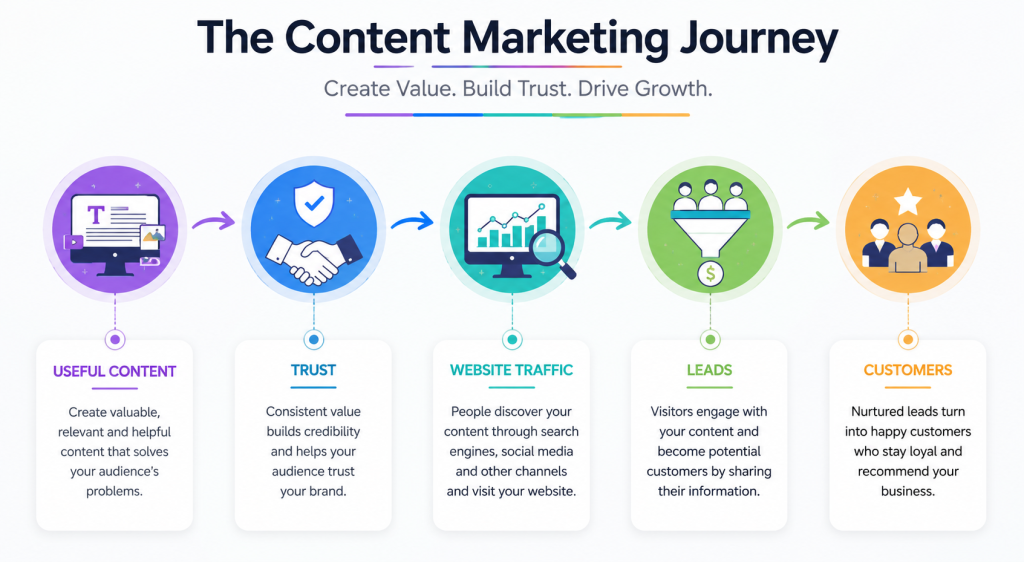
Content marketing follows a simple but highly effective process.
First, you identify the questions, challenges, and interests of your target audience.
Next, you create helpful content that answers those questions through blogs, videos, social media posts, emails, or other formats.
People discover this content through search engines, social media platforms, or referrals. Once they find value in your content, they begin trusting your brand.
As trust grows, visitors are more likely to subscribe to your newsletter, contact your business, request a quote, or purchase your products or services.
In simple words:
Helpful Content → Audience Trust → Business Growth
This is why successful brands invest heavily in content marketing instead of relying only on advertisements.
Top Benefits of Content Marketing
1. Increases Organic Traffic
Publishing high-quality content helps your website rank for relevant keywords in search engines.
Every blog post becomes another opportunity for people to discover your business through Google.
The more valuable content you create, the more chances you have of attracting organic visitors.
2. Builds Brand Authority
Customers trust businesses that consistently share useful knowledge.
If your website regularly publishes well-researched and practical content, your audience begins seeing your brand as an industry expert.
Authority plays an important role in both search engine rankings and customer decision-making.
3. Generates High-Quality Leads
Content marketing attracts people who are already interested in your products or services.
For example:
Someone searching for “How to improve website SEO” is more likely to hire an SEO agency than someone randomly seeing an advertisement.
This makes content marketing an excellent lead-generation strategy.
4. Improves Customer Trust
People buy from brands they trust.
Helpful blogs, educational videos, case studies, and success stories demonstrate your expertise without directly selling.
This creates confidence among potential customers.
5. Supports Every Digital Marketing Channel
Content marketing strengthens almost every other digital marketing strategy.
For example:
- SEO needs quality content.
- Social media needs engaging posts.
- Email marketing needs useful newsletters.
- Google Ads perform better with high-quality landing pages.
In other words, content acts as the foundation of your overall digital marketing strategies
Types of Content Marketing
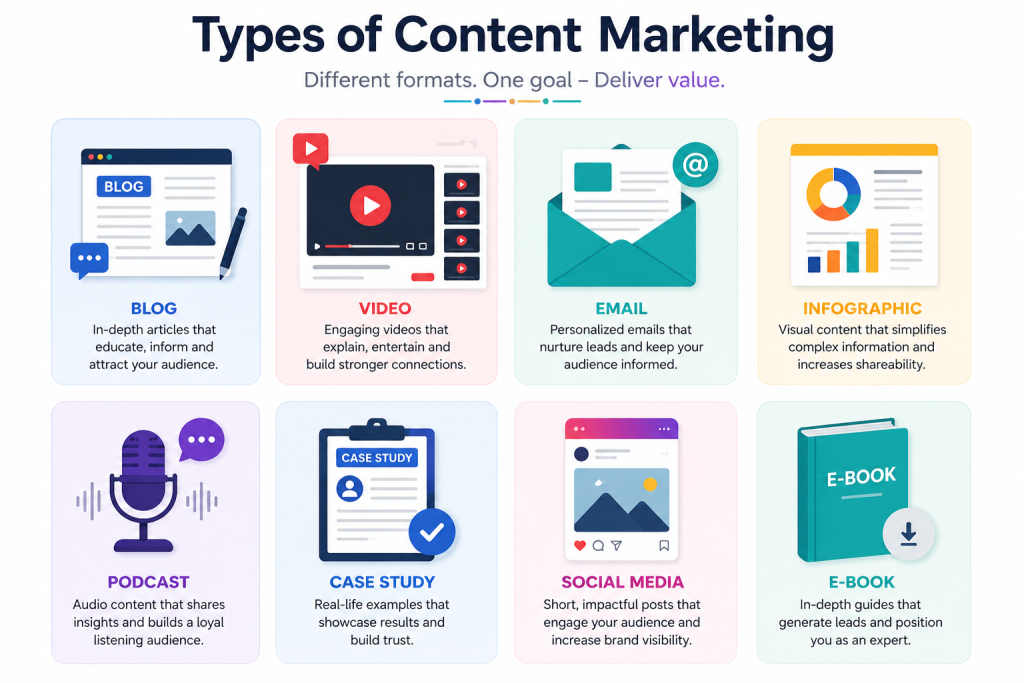
There are many ways businesses can share valuable content. Choosing the right format depends on your audience, industry, and marketing goals.
1. Blog Content
Blogging remains one of the most effective content marketing methods.
A well-written blog helps businesses:
- Rank on Google
- Answer customer questions
- Build authority
- Generate organic traffic
- Increase leads
For example, a digital marketing agency can publish blogs on SEO, social media marketing, Google Ads, and website optimization to educate business owners.
Over time, these articles become valuable assets that continue bringing visitors from search engines.
2. Video Content
Video content has become one of the fastest-growing marketing formats.
Businesses use videos to:
- Explain products
- Demonstrate services
- Share tutorials
- Showcase customer success stories
- Build stronger audience engagement
Platforms like YouTube, Instagram Reels, and LinkedIn make video marketing an essential part of modern content strategies.
3. Social Media Content
Social media content helps businesses interact directly with their audience.
Examples include:
- Educational carousel posts
- Infographics
- Short-form videos
- Tips and tricks
- Industry updates
- Customer testimonials
Unlike blog posts, social media content focuses on engagement, visibility, and community building.
4. Email Marketing
Email marketing remains one of the highest ROI (Return on Investment) digital marketing strategies. Instead of sending promotional emails all the time, businesses can use email marketing to deliver valuable content directly to subscribers.
Examples include:
- Weekly newsletters
- Industry insights
- Educational tips
- Product updates
- Exclusive offers
- Free guides and checklists
Consistently sharing useful information helps businesses nurture relationships with potential customers and keep existing customers engaged.
5. Infographics
Sometimes, complex information is easier to understand when presented visually.
Infographics combine text, icons, charts, and illustrations to explain concepts simply and engagingly.
Businesses commonly use infographics to share:
- Marketing statistics
- Step-by-step processes
- Industry trends
- Comparison charts
- Business strategies
Because infographics are visually appealing, they are also highly shareable across blogs and social media platforms.
6. Case Studies
Case studies showcase how a business solved a real customer’s problem and achieved measurable results.
Instead of making claims like “We increase website traffic,” a case study provides real examples, explaining:
- The client’s challenge
- The strategy used
- The implementation process
- The outcome
Case studies help build credibility and demonstrate expertise.
7. E-books and Guides
Long-form resources such as e-books, whitepapers, and downloadable guides provide in-depth information about specific topics.
Many businesses offer these resources in exchange for a visitor’s email address, making them an excellent lead-generation tool.
For example:
- Complete SEO Guide
- Social Media Marketing Handbook
- Digital Marketing Checklist
- Beginner’s Guide to Google Ads
How to Create an Effective Content Marketing Strategy
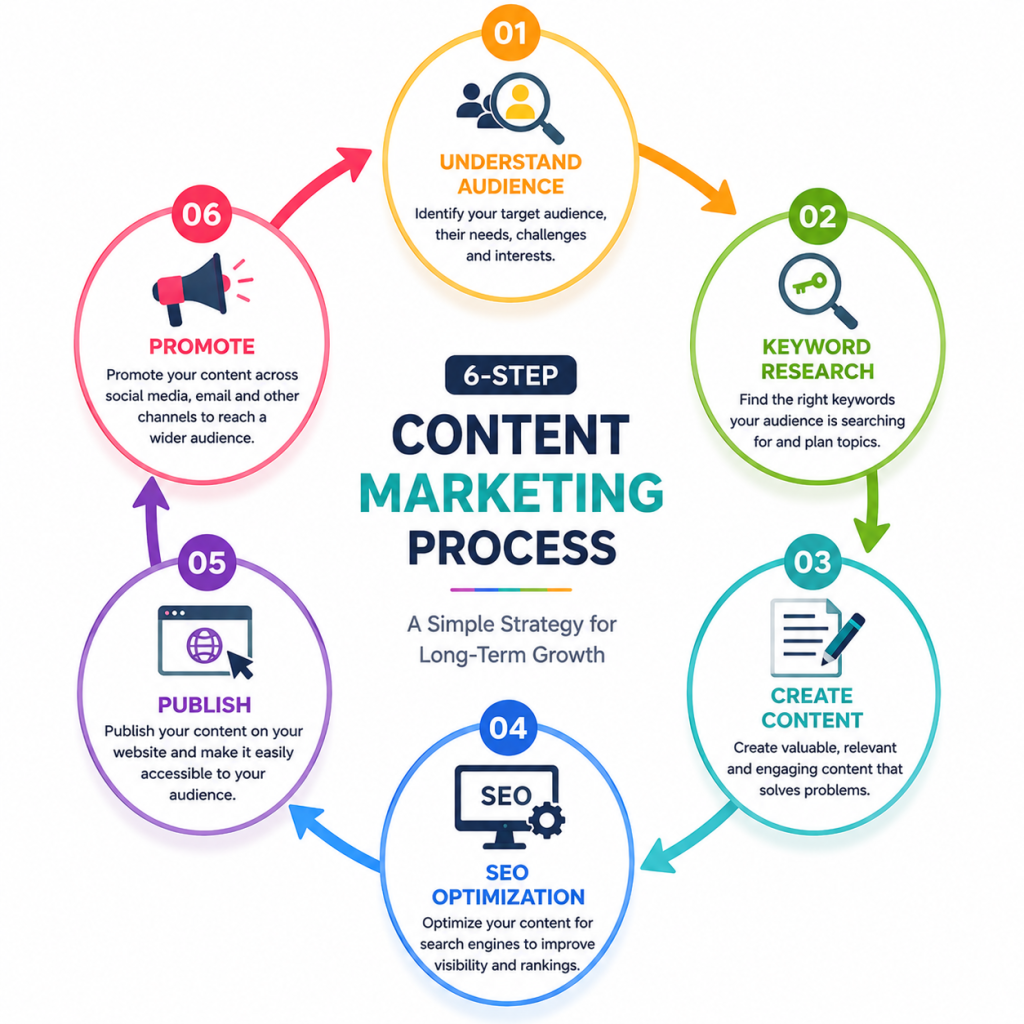
Creating content without a strategy often leads to inconsistent results. A successful content marketing strategy starts with understanding your audience and creating content that aligns with their needs.
Step 1: Understand Your Target Audience
Before creating any content, ask yourself:
- Who is your ideal customer?
- What problems are they trying to solve?
- What questions do they frequently ask?
- Which platforms do they use?
When you understand your audience, creating relevant content becomes much easier.
Step 2: Set Clear Goals
Every piece of content should have a purpose.
For example:
- Increase website traffic
- Generate leads
- Improve brand awareness
- Build authority
- Increase email subscribers
- Boost conversions
Clear goals help measure the success of your content marketing efforts.
Step 3: Perform Keyword Research
Keyword research helps identify the topics people are actively searching for.
Instead of guessing what your audience wants, use keyword research to create content around real search intent.
Look for keywords with:
- High search volume
- Relevant business intent
- Manageable competition
- Long-term search demand
Step 4: Create High-Quality Content
Quality always matters more than quantity.
A great content marketing article should:
- Answer user questions clearly
- Be easy to read
- Include accurate information
- Offer practical advice
- Be well-structured with headings and visuals
The goal is to create content that genuinely helps readers.
Step 5: Optimize for SEO
Even the best content needs optimization to reach the right audience.
Basic SEO practices include:
- Writing compelling titles
- Using relevant keywords naturally
- Optimizing meta descriptions
- Adding internal links
- Using descriptive image alt text
- Improving page speed
- Creating a mobile-friendly experience
SEO helps search engines understand your content and improves your chances of ranking higher.
Step 6: Promote Your Content
Publishing a blog is only the beginning.
To maximize reach, promote your content through:
- Email newsletters
- Online communities
- Business partnerships
Content promotion increases visibility and brings more visitors to your website.
Content Marketing Examples
Let’s look at a few examples of how businesses use content marketing successfully.
Example 1: Local Service Business
A local home cleaning company publishes articles answering common questions like:
- How often should carpets be cleaned?
- How to remove difficult stains?
- Home cleaning checklist
These articles attract homeowners searching for cleaning advice, increasing both website traffic and service inquiries.
Example 2: Digital Marketing Agency
A digital marketing agency regularly publishes educational content covering:
- SEO
- Google Ads
- Content Marketing
- Social Media Marketing
- AI SEO
Over time, the agency becomes a trusted resource, making potential clients more confident about choosing its services.
Example 3: e-Commerce Store
An online fashion store creates:
- Style guides
- Product comparison blogs
- Seasonal buying tips
- Fashion trend articles
This content attracts potential buyers long before they decide to purchase.
Common Content Marketing Mistakes to Avoid
Many businesses create content regularly but fail to achieve results because of avoidable mistakes.
Some of the most common include:
- Publishing content without understanding user intent.
- Writing only promotional articles.
- Ignoring keyword research.
- Posting inconsistently.
- Failing to update older content.
- Not measuring performance.
- Neglecting internal linking.
- Creating content without a clear call-to-action.
Avoiding these mistakes can significantly improve your long-term content marketing success.
Content Marketing vs Traditional Marketing
Businesses have used traditional marketing for decades through newspapers, television, radio, billboards, and print advertisements. While these methods still have value in certain situations, content marketing offers a more customer-focused and measurable approach.
Traditional marketing is designed to interrupt people with promotional messages, whereas content marketing attracts audiences by providing useful information that solves their problems.
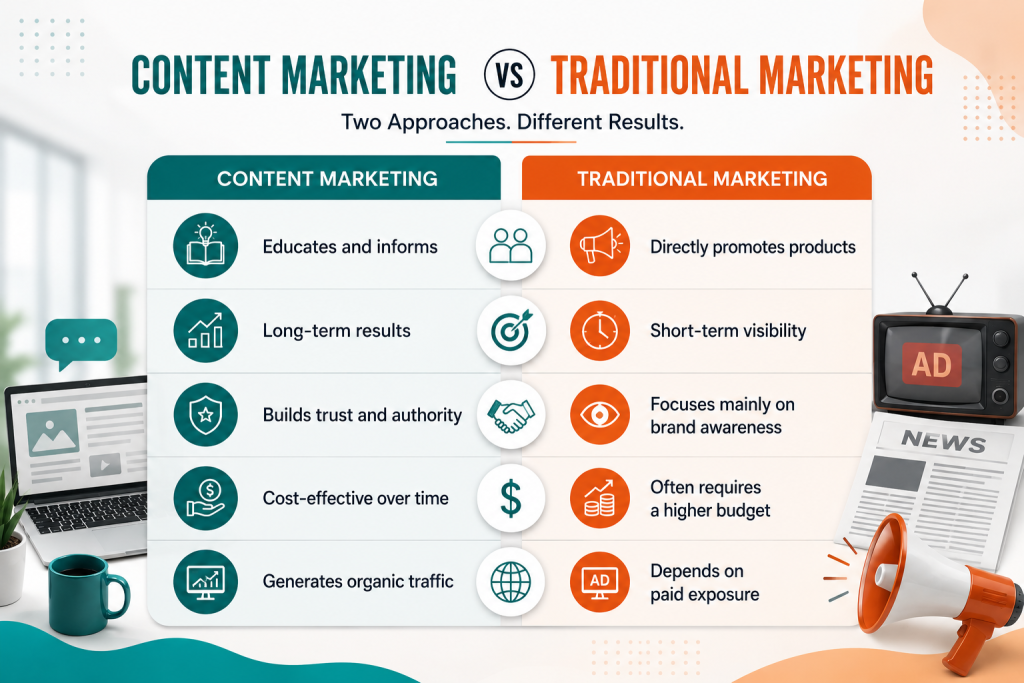
Instead of asking customers to buy immediately, content marketing builds relationships first. This approach creates stronger brand loyalty and often results in higher-quality leads.
How to Measure the Success of Content Marketing
Publishing content is only the first step. To understand whether your strategy is working, you should regularly monitor key performance indicators (KPIs).
Some important metrics include:
- Organic website traffic
- Keyword rankings
- Time spent on page
- Bounce rate
- Pages viewed per session
- Social shares
- Backlinks
- Newsletter sign-ups
- Lead generation
- Conversion rate
Using tools like Google Analytics and Google Search Console can help you understand how visitors interact with your content and identify opportunities for improvement.
The Future of Content Marketing
Content marketing continues to evolve as search engines and user behavior change.
Today, businesses are moving beyond simply publishing blog posts. Modern content strategies now include AI-assisted research, personalized experiences, video-first content, voice search optimization, and interactive formats.
Some trends shaping the future include:
- AI-assisted content planning
- Voice search optimization
- Short-form educational videos
- Interactive content
- Personalized email campaigns
- Data-driven content strategies
- Topic clusters instead of isolated articles
- Experience-focused content that genuinely helps users
However, one principle remains unchanged: high-quality, trustworthy, and user-focused content will always outperform content created only to rank in search engines.
Final Thoughts
Content marketing is much more than writing blog posts. It is a long-term strategy that helps businesses educate their audience, build trust, improve search visibility, and generate sustainable growth.
By consistently creating valuable and relevant content, businesses can establish themselves as trusted industry experts while attracting customers organically through search engines and other digital channels.
Whether you run a startup, a local business, or an established company, investing in content marketing today can create lasting results for years to come. The key is to understand your audience, create content that solves real problems, optimize it for search engines, and continuously improve your strategy based on performance.
In an increasingly competitive digital landscape, businesses that prioritize helpful, high-quality content are more likely to build stronger customer relationships, increase brand visibility, and achieve long-term online success.
Ready to Grow Your Business with Content Marketing?
At Khushvora, we help businesses create SEO-focused, high-quality content that attracts the right audience, improves search visibility, and supports long-term business growth.
FAQ
Content marketing is a digital marketing strategy that involves creating and sharing valuable content to educate, inform, and engage a target audience. Instead of directly promoting products or services, it focuses on building trust and helping potential customers make informed decisions.
Content marketing helps businesses increase online visibility, attract qualified website traffic, build customer trust, improve search engine rankings, and generate long-term leads. It also supports SEO, social media, and email marketing efforts.
Some of the most common types of content marketing include:
-Blog posts
-Videos
-Social media content
-Email newsletters
-Infographics
-Case studies
-E-books and guides
-Podcasts
Each format serves different marketing goals and audience preferences
High-quality content helps search engines understand your website’s expertise and relevance. Optimized blog posts targeting user search intent can improve keyword rankings, increase organic traffic, and earn backlinks over time.
Yes. Content marketing is one of the most cost-effective strategies for small businesses. By consistently publishing helpful and relevant content, small businesses can attract potential customers, build credibility, and compete with larger brands without relying only on paid advertising.
Digital marketing is a broad term that includes strategies such as SEO, social media marketing, email marketing, PPC advertising, and content marketing. Content marketing is one part of digital marketing that focuses specifically on creating valuable content to attract, engage, and retain customers.