
On-Page SEO vs Off-Page SEO: How They Work Together to Improve Rankings
Getting a website to rank on Google takes more than simply adding keywords to a page; your content needs to be useful, your pages need to be properly optimized, and a well-designed website should immediately give visitors a clear and trustworthy impression of your business. Understanding on-page SEO vs. off-page SEO can help you create a more complete approach to improving your website’s search visibility.
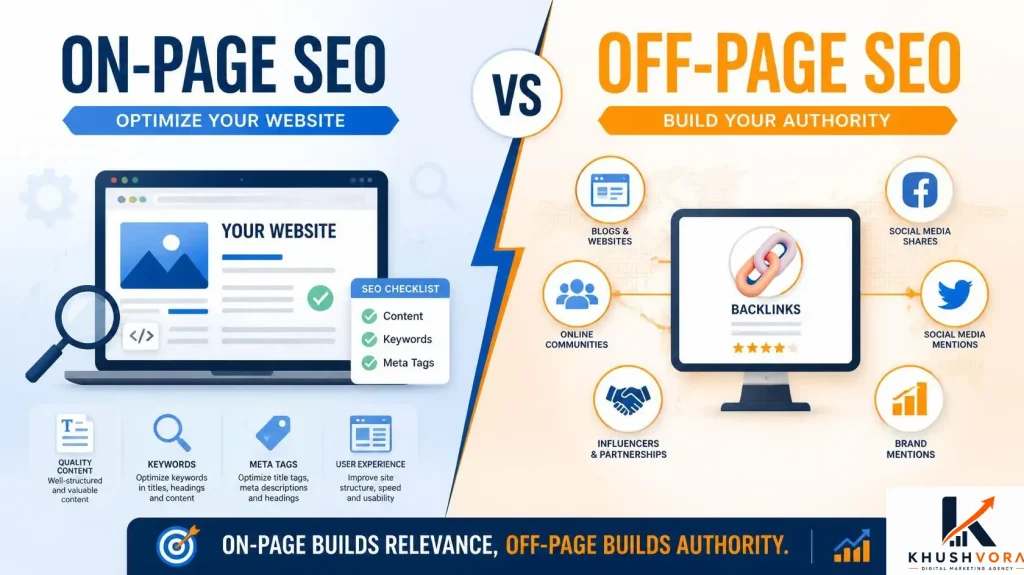
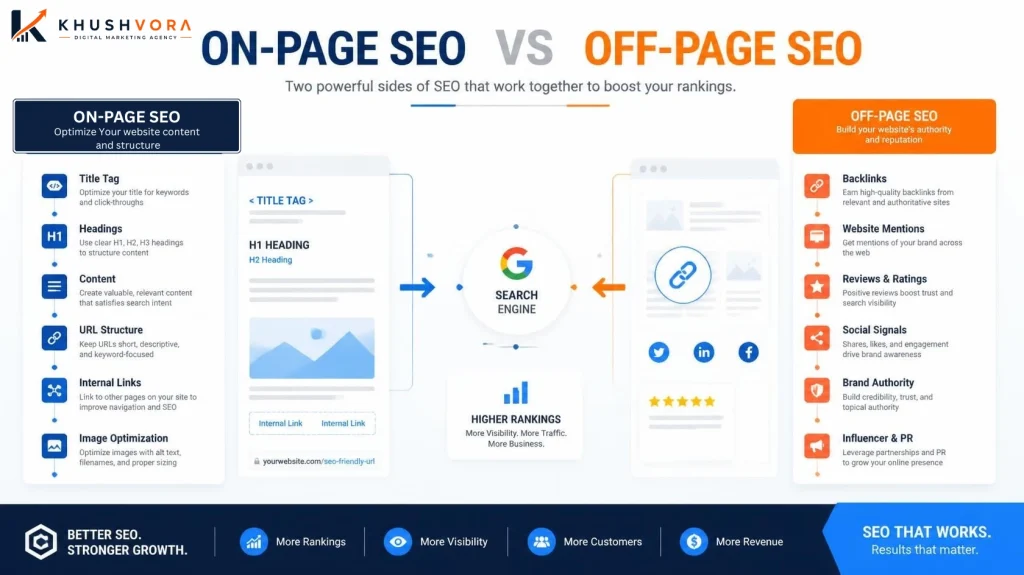
On-page and off-page SEO work hand in hand to build a stronger presence in search results. On-page SEO is everything that you can improve on your site directly, such as content, headings, title tags, internal links, URLs, and images. Off-page SEO involves activities happening outside your website, like getting relevant backlinks, improving brand visibility, and developing your online reputation.
On-Page vs Off-Page SEO: A Simple Breakdown
On-page SEO focuses on enhancing elements that are directly available on your website. This includes your content, title tags, headings, URLs, images, internal links, and overall page structure. The goal is to make your pages useful for visitors and easier for search engines to understand.
Off-page SEO, on the other hand, focuses on activities outside your website that can help improve its visibility, credibility, and authority. Backlinks, brand mentions, digital PR, and online reputation are some common examples.
In simple terms, on-page SEO improves what is on your website, while off-page SEO helps create your website’s reputation beyond it.
Quick Comparison
| key Differences | On-page SEO | Off-page SEO |
| Control | Happens on your website | happens outside your website |
| Main purpose | Focuses on content and page optimization | focuses on authority and reputation |
| Examples | title tags, headings, URLs, images | backlinks, mentions, digital PR |
| Time to see results | mostly under your control | depends more on external sources |
| Primary focus | improves relevance and usability | builds visibility and credibility |
Why Do On-Page and Off-Page SEO Matter?
On-page and off-page are both important for improving your website’s visibility, relevance, and authority in search results. Understanding on-page SEO vs off-page SEO helps you create a balanced SEO strategy for long-term growth.
The search engine considers multiple factors when deciding which pages should rank for a search query. A website with useful content and proper optimization has a stronger foundation, but building authority outside the website can also help it compete for more competitive search terms.
On-Page SEO Improves Relevance
On-page SEO helps search engines understand what your pages are about and whether they are relevant to a user’s search. Optimizing elements such as content, headings, title tags, URLs, internal links, and images can make your pages easier to understand and navigate.
It also helps create a better experience for visitors by making information clear, useful, and easy to find.
Off-Page SEO Builds Authority
Off-page SEO helps enhance the reputation of your website beyond its own pages. Earning relevant backlinks, getting brand mentions, and building your presence on external platforms can help strengthen your website’s authority. Off-page SEO works best when you prioritize relevance and authority over link volume. A few relevant and trustworthy links can be more valuable than a large number of low-quality links.
Both work together
On-page and off-page SEO have different roles, but they work together as part of a complete SEO strategy. On-page optimization provides a strong foundation for your website, while off-page efforts can help build trust and authority over time. That’s why understanding on-page SEO vs off-page SEO is important when creating a strategy for long-term organic growth.
On-Page or Off-Page SEO: Which Strategy Should You Prioritize?
When starting an SEO campaign, it is generally better to focus on on-page SEO first and then gradually build your off-page SEO efforts. Your website needs a strong foundation before you start investing significant time in building external authority.
Start With An On-Page SEO
A new website should first establish a strong on-page foundation across its essential pages. Create useful content that matches search intent, organize your website clearly, and fix basic technical and on-page issues. This gives search engines a clear understanding of your website before you start actively building external authority.
Build Off-Page SEO Over Time
Once your website and content are well optimized, you can begin working on off-page SEO. Focus on earning relevant, high-quality backlinks and increasing your brand’s visibility rather than trying to build as many links as possible. The right balance between on-page and off-page SEO will depend on your website, competition, industry, and SEO goals. For most websites, however, on-page SEO provides the foundation, while off-page SEO helps strengthen that foundation over time.
On-Page SEO Factors
On-page SEO includes the elements you can optimize directly on your website to make your pages more useful for visitors and easier for search engines to understand. These elements can influence how well a page matches a search query and how effectively users interact with your content.
Title Tags
A title tag tells search engines and users what a webpage is about. It can appear as the clickable title in search results, so it should be clear, relevant, and naturally include the primary keyword when appropriate.
Best Practices:
- Write a unique title for each page.
- Include the primary keyword naturally.
- Keep it clear and concise.
- Avoid keyword stuffing.
Example:
SEO Services for Business Growth | KhushVora
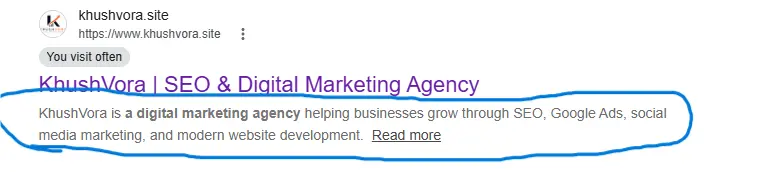
Meta Descriptions
A meta description briefly summarizes what a webpage is about. It may appear below the title in search results and can encourage users to click on your page.
Best Practices:
- Write a unique description for each page.
- Include the primary keyword naturally.
- Clearly explain what the page offers.
- Keep it concise and relevant.
Example:
URL Slugs
A URL slug is the part of a webpage URL that helps users and search engines understand what the page is about. Keep it short, descriptive, and relevant to the page topic.
Best Practices:
- Keep the slug short and clear.
- Include the primary keyword naturally.
- Use hyphens to separate words.
- Avoid unnecessary numbers of characters.
Example:
khushvora.site/on-page-seo-vs-off-page-seo
Heading Tags
Heading tags help organize your content into a clear structure. They make it easier for search engines to understand your page and help visitors quickly find the information they need.
Best Practices:
- Use one clear H1 for the main page title.
- Use H2 for major sections.
- Use H3 for supporting topics.
- Keep headings descriptive and relevant.
- Include keywords naturally where they fit.
Search Intent & Content Quality
Great content is innovative, informative, factually correct, and matched with what users are looking for. In addition, knowing search intent helps you develop content that addresses the user’s inquiry, not just add keywords.
Best Practices:
- Match material to the user’s search intent.
- Provide helpful and correct information.
- Make the content unique and simple to understand.
- Use terms in a natural way.
- Revise outdated data as required.
Internal Linking
Internal links connect one page of your website to another. They help users discover related content and allow search engines to better understand your website structure and the relationship between your pages.
Best Practices:
- Link to relevant pages naturally.
- Use descriptive anchor text.
- Connect important pages with related content.
- Avoid adding too many unnecessary links.
Image Optimization
Image optimization helps improve page speed, accessibility, and the overall user experience. Properly optimized images can also help search engines understand the visual content on your pages.
Best Practices:
- Compress images before uploading.
- Use descriptive file names.
- Add relevant alt text.
- Use WebP or other suitable modern formats.
Keyword Optimization
Use relevant keywords naturally throughout your content to help search engines understand the topic of your page. Focus on providing useful information rather than repeating keywords unnecessarily.
Best Practices:
- Use the primary keyword naturally.
- Add relevant related terms.
- Avoid keyword stuffing.
- Prioritize helpful, readable content.
Off-Page SEO Factors
Understanding on-page SEO vs off-page SEO is important because off-page SEO focuses on activities outside your website that can improve its authority, visibility, and reputation.
Backlinks
Backlinks are links from other websites that point to your site. Relevant and trustworthy backlinks can strengthen your website’s authority and help improve its visibility in search results.
Best Practices:
- Earn links from relevant websites.
- Focus on quality rather than quantity.
- Avoid spammy or paid links intended to manipulate rankings.
Link Quality & Relevance
Not all backlinks have the same value. Links from relevant and trustworthy websites are generally more useful than links from unrelated or low-quality sources. The context of the linking page also matters when building your website’s authority.
Best Practices:
- Prioritize relevant websites.
- Focus on trustworthy sources.
- Avoid links from spammy websites.
Brand Mentions
Brand mentions are references to your business or website on external websites, social platforms, or online publications. They can help improve brand visibility and strengthen your online presence.
Best Practices:
- Encourage genuine brand mentions.
- Get featured on relevant platforms.
- Keep your brand information consistent.
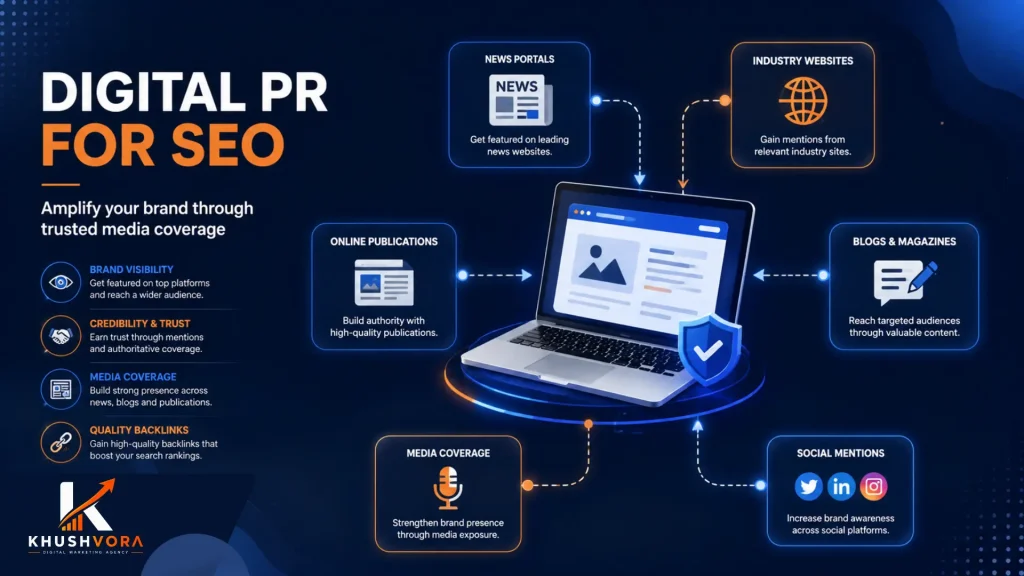
Digital PR
Digital PR helps improve your brand’s online visibility through relevant publications, industry websites, and online media. It can also create opportunities to earn quality backlinks and build credibility.
Best Practices:
- Target relevant publications.
- Share useful and newsworthy content.
- Focus on quality coverage
Social Media & Content Promotion
As part of on-page SEO vs off-page SEO, social media and content promotion support the off-page side by increasing your content’s reach beyond your website. Greater visibility can bring more visitors, brand mentions, and opportunities to earn backlinks.
Best practices:
- Share useful content consistently.
- Focus on platforms relevant to your audience.
- Encourage genuine engagement and sharing.
Online Reviews & Reputation
Online reviews can influence how people perceive and help build trust with potential customers. Maintaining a positive online reputation can also strengthen your brand’s overall presence across external platforms.
Best Practices:
- Encourage genuine customer reviews.
- Respond professionally to feedback.
- Keep business information consistent across platforms.
Which is more important: on-page SEO or off-page SEO?
Neither on-page nor off-page SEO should be considered more important on its own. On-page SEO vs off-page SEO is better understood as two complementary parts of an overall SEO strategy. On-page SEO provides the foundation by making your website useful, relevant, and easy for search engines to understand. Off-page SEO then helps build authority and credibility beyond your website.
For a new website, it makes sense to optimize your pages and content first. Once that foundation is strong, you can gradually focus on earning relevant backlinks, building brand visibility, and developing your online reputation. The right balance depends on your website, competition, industry, and SEO goals. Using both approaches together can support stronger and more sustainable organic growth.
How on-page and Off-page SEO work together
On-page and off-page SEO support different parts of the same SEO strategy. On-page SEO helps make your website relevant, useful, and easy to understand, while off-page SEO helps build authority and trust around it. When both approaches are used together, they can create a stronger foundation for organic growth. For example, useful, well-optimized content can attract visitors and also give other websites a reason to link to it.
A balanced on-page SEO vs. off-page SEO strategy allows you to improve your website while gradually building its reputation outside the site. This combination can help your pages become more competitive in search results over time.
Practical SEO Strategy For A New Website
A new website should first build its SEO foundation and then gradually work on improving its authority. A simple approach can help you stay consistent without trying to optimize everything at once.
- Set up the website properly: make sure important pages are accessible, mobile-friendly, fast, and easy to navigate.
- Research relevant keywords: identify keywords that match your audience’s searches and understand the intent behind them.
- Optimize important pages: improve titles, headings, URLs, content, images, internal links, and other on-page elements.
- Create useful content: publish original content that answers real questions and provides value to your target audience.
- Build internal links: connect related pages to help visitors navigate your website and help search engines discover important content.
- Start building authority: Once your website has a solid foundation, focus on earning relevant backlinks, mentions, and other off-page signals.
- Monitor and improve: track rankings, organic traffic, and user behavior to identify areas that need further optimization.
A balanced on-page SEO vs off-page SEO approach can help a new website build visibility and authority gradually.
Common SEO Mistakes
Avoiding common SEO mistakes is important because even a well-planned strategy can lose effectiveness when basic optimization is ignored.
- Keyword stuffing: repeating keywords unnaturally can make content difficult to read and may hurt its quality.
- Ignoring search intent: content should answer what users are actually looking for instead of focusing only on keywords.
- Poor internal linking: important pages may remain difficult for users and search engines to discover without relevant internal links.
- Using low-quality backlinks: building links from irrelevant or spammy websites can damage your website’s credibility.
- Duplicate Content: Reusing the same content across multiple pages can make it harder for search engines to determine which page is most relevant.
- Ignoring mobile experience: A website should work properly and remain easy to use on different screen sizes.
- Neglecting page speed: slow-loading pages can create a poor user experience and affect overall website performance.
- Not monitoring SEO performance: Regularly checking traffic, rankings, and technical issues helps you identify problems and improve your strategy over time.
Frequently Asked Questions About On-Page and Off-Page SEO
On-page SEO focuses on optimizing elements within your website, such as content, headings, URLs, and images. Off-page SEO focuses on external activities such as backlinks, brand mentions, digital PR, and online reputation.
Both are important, but they serve different purposes. On-page SEO creates a strong foundation for your website, while off-page SEO helps build authority and credibility outside your website.
Off-page SEO usually takes time because building authority depends on earning quality backlinks, mentions, and trust. Results can vary depending on your website, competition, industry, and the quality of your SEO efforts.
Yes. Relevant and trustworthy backlinks can support your website’s authority and visibility. However, quality is more important than simply collecting a large number of backlinks.
Yes. A balanced u003cstrongu003eon-page SEO vs off-page SEOu003c/strongu003e strategy can be used together. Optimizing your website while gradually building external authority can create a stronger and more sustainable SEO approach.u003cbru003e
Conclusion
Understanding on-page SEO vs off-page SEO is important for building a strong and balanced SEO strategy. On-page SEO helps improve your website’s content, structure, and usability, while off-page SEO helps build authority and trust beyond your website. Neither approach works best in isolation. A well-optimized website combined with relevant backlinks, brand visibility, and a strong online reputation can create better opportunities for long-term organic growth.
If you want to improve your website’s search visibility with a practical SEO strategy, Khushvora can help you build a clear approach focused on sustainable growth